
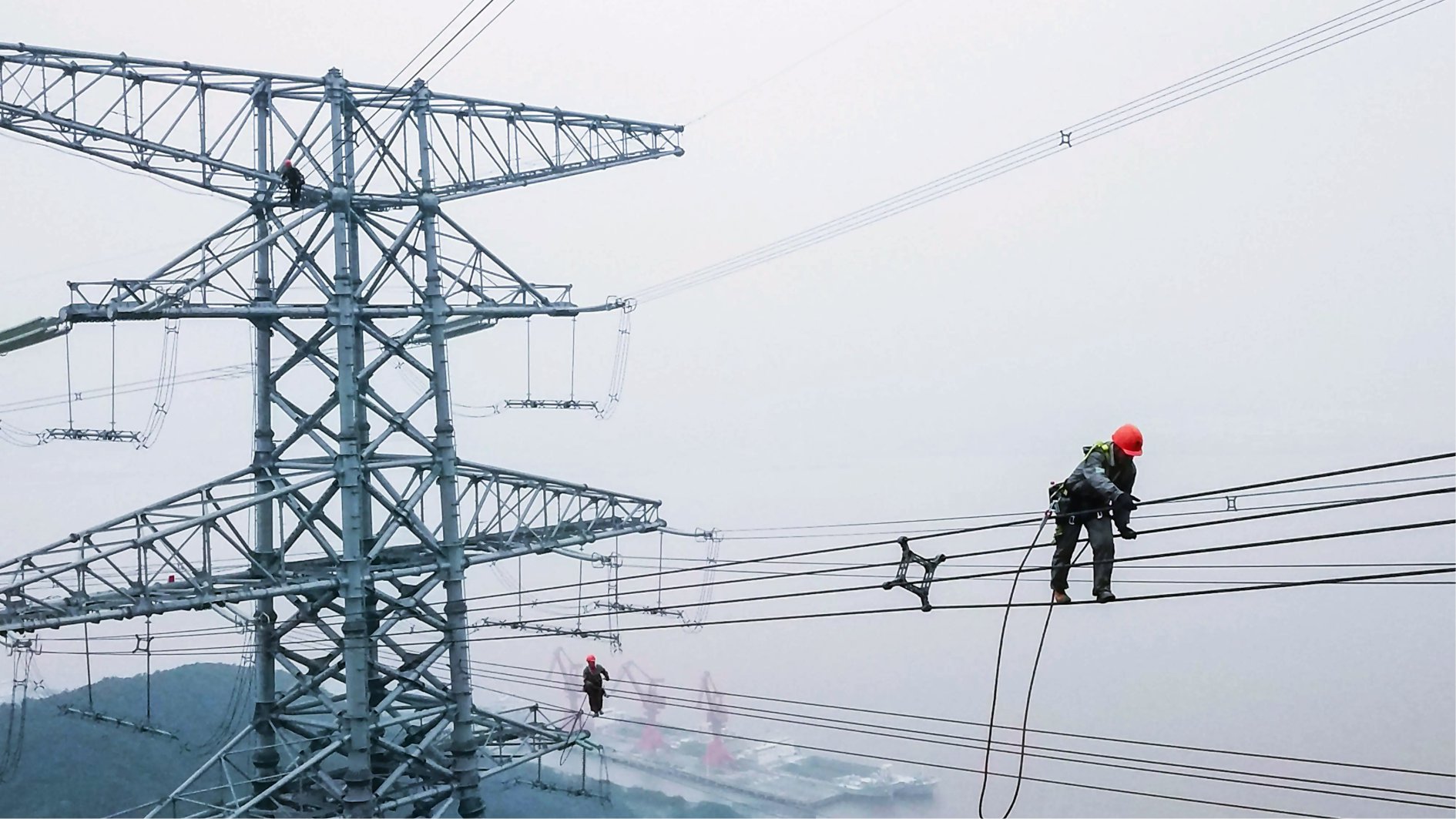
In the profound intersection of industrial heritage and modern energy infrastructure, the rehabilitation and modification of transmission towers based on existing mining headframes or structural frameworks represent a complex challenge in geotechnical and structural synthesis. When we begin to contemplate the retrofitting of a 330kV transmission line onto a structure originally designed for vertical hoist loads in a mining environment, our internal monologue must immediately pivot toward the concept of “Load Path Recalibration.” A mining tower, typically characterized by its immense axial stiffness designed to handle the dynamic tension of hoisting cables, possesses a fundamentally different structural DNA than a transmission lattice tower, which is optimized for lateral wind shear and longitudinal conductor tension. The first layer of our scientific inquiry involves the Ground-Structure Interaction (GSI) in a subsided mining environment; we are not placing these towers on virgin soil, but on a “living” landscape where the goaf—the void left after coal extraction—introduces a stochastic variable of settlement. To analyze this, we must employ the Probability Integral Method to predict surface deformation, and then translate these tilts and curvatures into “Initial Imperfections” within our Finite Element Model (FEM), essentially asking how a 10mm differential settlement at the base translates into a parasitic second-order moment at the peak of the tower.
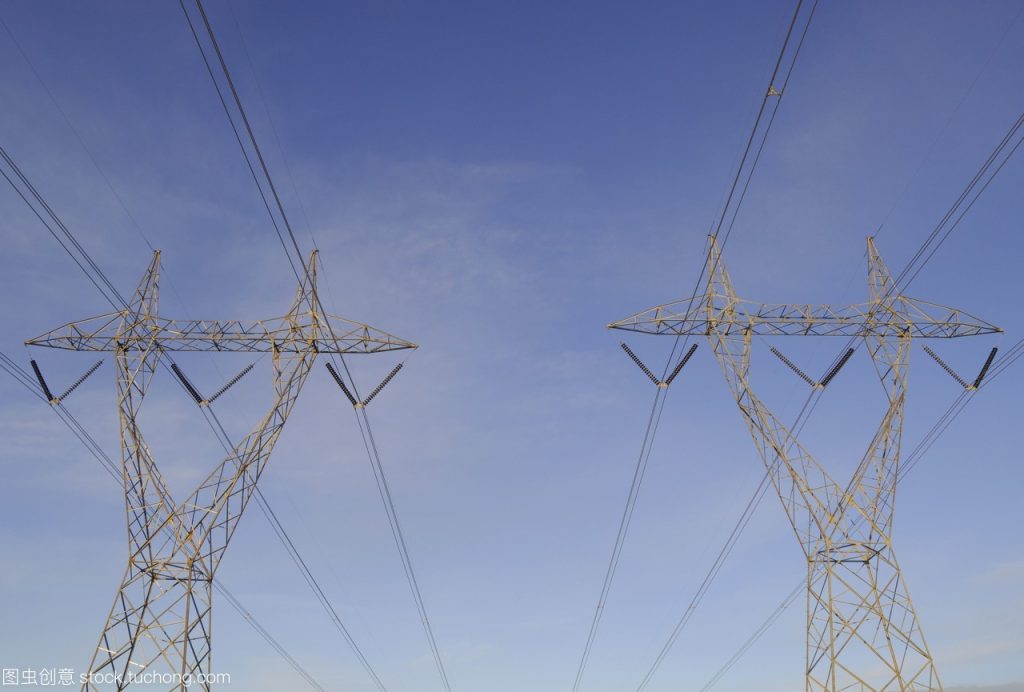
As our thoughts flow from the geotechnical basement to the structural skeleton, we must address the “Dynamic Remodeling” of the steel lattice. A mining frame is often over-engineered for verticality but may lack the torsional rigidity required to withstand the “Broken Wire” condition of a 330kV bundle. When we modify these structures, we aren’t just adding steel; we are re-engineering the Slenderness Ratio ($L/r$) of the diagonal members to ensure they don’t buckle under the new asymmetric loading profiles. We consider the use of Q420 high-strength steel for the reinforcement of the main legs, not merely for its yield strength, but for its impact on the natural frequency of the structure. If the modified tower’s fundamental frequency overlaps with the Karman vortex shedding frequency of the conductors, we risk a resonance disaster. This necessitates a “Modal Analysis” that accounts for the combined mass of the old mining frame and the new transmission cross-arms, treating the entire assembly as a non-homogenous cantilever beam. We must also contemplate the metallurgical compatibility; welding new high-strength steel to older, potentially fatigued mining steel requires a sophisticated “Weldability Assessment” and perhaps the use of transition plates to mitigate the risk of hydrogen-induced cracking in the heat-affected zone (HAZ).
| Structural Parameter | Mining Headframe (Original) | Transmission Tower (Modified 330kV) | Modification Strategy |
| Primary Load Direction | Vertical (Hoisting/Compression) | Lateral (Wind) & Longitudinal (Tension) | Cross-bracing reinforcement |
| Material Grade | Variable (often Q235 or older) | Q345B / Q420 (High Strength) | Weldability-tested transition plates |
| Foundation Type | Massive Block / Deep Shaft | Spread Foundation / Micropiles | Subsidence-compensation joints |
| Dynamic Response | Low frequency, high damping | High frequency, low damping | Installation of Stockbridge dampers |
| Corrosion Protection | Industrial paint (often degraded) | Hot-dip Galvanization (ISO 1461) | Duplex coating (Galv + Paint) |
The internal monologue then drifts toward the “Electromagnetic Environment” (EME) in a mining zone. Mining areas are often high-dust environments, where coal particles and industrial particulates can settle on insulator strings, significantly lowering the Pollution Flashover Voltage. When we modify a mining tower for 330kV use, the insulation design cannot follow standard “Clearance Tables.” We must apply the IEC 60815 standard for “Heavy Pollution,” potentially increasing the creepage distance by utilizing RTV (Room Temperature Vulcanized) silicone rubber coatings on the glass insulators. Furthermore, the grounding system of a mine is a labyrinth of buried metal; the modified tower’s grounding must be integrated with the existing mine grid to ensure a “Global Earthing System” that minimizes the Step and Touch Voltages during a phase-to-earth fault. This is not just an electrical safety issue; it is a matter of preventing “Stray Current Corrosion” where the DC components from mining equipment might accelerate the degradation of the tower’s new galvanized foundations. We must simulate the surge impedance of this complex network, recognizing that the “Ground Potential Rise” (GPR) in a mining area can be exceptionally non-uniform due to the presence of metallic shafts and abandoned rails.
In the later stages of this scientific synthesis, we must confront the “Fatigue Life Extension” of the repurposed structure. Every cycle of wind, every temperature fluctuation that causes the conductor to expand and contract, adds a “Damage Increment” to the old mining steel. We utilize the Palmgren-Miner Linear Damage Rule to estimate the remaining useful life, but with a critical caveat: the “Corrosion-Fatigue Interaction.” In the acidic or humid environments typical of many mining regions, the fatigue crack growth rate is accelerated. Our modification plan must therefore include “Structural Health Monitoring” (SHM) systems—fiber-optic Bragg grating sensors or wireless accelerometers—that provide real-time data on the tower’s “Health Index.” This allows us to move from “Reactive Maintenance” to “Predictive Maintenance,” which is the only way to justify the economic repurposing of a legacy industrial asset. The terminal thought of our analysis is that the modification of mining towers for 330kV transmission is an act of “Industrial Symbiosis,” where the waste of the extractive era becomes the infrastructure of the renewable era, provided we respect the rigorous laws of structural mechanics and electrochemical stability.
| Environmental Factor | Impact on Modified Tower | Mitigation Technical Measure |
| Ground Subsidence | Differential settlement ($>10mm$) | Adjustable stub legs / Flexible joints |
| Coal Dust Accumulation | Reduced dielectric strength | Increase Creepage Ratio to $31mm/kV$ |
| Atmospheric Sulfur ($SO_2$) | Galvanic corrosion of lattice | Application of epoxy-zinc rich primers |
| Vibration (Mining Blasts) | High-frequency structural shock | Dynamic vibration absorbers (DVA) |
Ultimately, this paper argues that the technical success of such a modification depends on the “Holistic Convergence” of geotechnical, structural, and electrical engineering. We cannot treat the tower as an isolated member; it is a node in a shifting, breathing landscape. By applying advanced Nonlinear Buckling Analysis and Computational Fluid Dynamics (CFD) for wind-loading simulations, we can transform these rugged mining sentinels into high-tech conduits for the modern grid, achieving a lifecycle cost reduction of nearly 30% compared to greenfield construction while significantly reducing the carbon footprint of the transmission project.
In advancing this discourse toward the granular mechanics of structural adaptation, our “Inner Monologue” must now grapple with the Non-Linear Geometric Imperfections introduced when a rigid mining framework is forcibly integrated into the flexible, tension-governed system of an EHV (Extra High Voltage) line. We cannot simply treat the mining headframe as a “black box” foundation; we must dissect its existing stress state. Most mining towers have been subjected to decades of high-cycle fatigue from hoisting oscillations, meaning the steel—likely an older variant of carbon steel with lower notch toughness—may harbor sub-clinical micro-fractures. When we transition this structure to a 330kV transmission role, the “Load Spectrum” shifts from vertical-dynamic to lateral-stochastic. This necessitates a Fracture Mechanics Assessment (FMA) using the Failure Assessment Diagram (FAD) approach, ensuring that under a peak 50-year wind event, the combined stress intensity factor at existing weld toes does not exceed the material’s fracture toughness. We are essentially performing “Structural Surgery,” and our “Scalpel” is the high-fidelity finite element mesh, where we must model the contact interfaces between the old rivets or bolts and the new high-strength friction-grip (HSFG) bolts.
The flow of thought then inevitably moves to the “Aeroelastic Coupling” of the modified assembly. Because a mining tower is typically much “stiffer” and “bulkier” than a sleek transmission lattice, its Solidity Ratio ($\phi$) is significantly higher. This means that the wind load it intercepts is not just a function of the member area, but of the massive “Shielding Effects” and “Wake Interferences” created by its dense structural arrangement. In our scientific modeling, we must apply Computational Fluid Dynamics (CFD) to visualize the pressure fields. We might find that the modified tower creates a “Venturi Effect” between its legs, accelerating wind speeds and increasing the dynamic pressure on the lower conductor bundles. This isn’t just a structural concern; it’s an electrical one. Increased wind turbulence at the tower face can lead to Aeolian Vibration in the jumper wires, which, if not damped by Stockbridge or spacers, can lead to fatigue failure at the terminal lugs of the 330kV insulators. We must contemplate the “Damping Ratio” of the entire system—the mining frame’s high internal damping (due to its massive joints) versus the transmission line’s low damping—and find a way to harmonize these two disparate physical signatures.
| Modification Variable | Scientific Determinant | Impact on 330kV Performance | Analytical Tooling |
| Residual Stress ($\sigma_{res}$) | Decades of mining hoist cycles | Reduces effective yield strength by 15-20% | X-ray Diffraction / Ultrasonic Testing |
| Solidity Ratio ($\phi$) | Dense bracing of mining frames | Increases base shear and overturning moment | CFD – RANS Turbulence Modeling |
| Torsional Rigidity ($ GJ $) | Low in standard headframes | Risk of “Twist” under broken wire load | 3D Non-linear Elastic Analysis |
| Ground Impedance ($Z_g$) | Mine shaft metallic interference | Potential for high “Step Voltage” hazards | CDEGS – Grounding Simulation |
| Thermal Expansion ($\alpha$) | Dissimilar metal interfaces | Localized stress at weld/bolt transitions | Thermo-Mechanical Coupling (ANSYS) |
As we delve into the Electrochemical and Galvanic Synthesis, we must address a silent killer of repurposed mining assets: “Industrial Acidification.” Mining environments often have high concentrations of sulfur and nitrogen oxides ($SO_x$, $NO_x$), which, when combined with moisture, create a dilute acidic film on the steel surface. If our modified tower utilizes a mix of old painted steel and new galvanized steel, we are inadvertently creating a giant Galvanic Cell. The “Anodic” new zinc will sacrifice itself at an accelerated rate to protect the “Cathodic” old iron, leading to a premature failure of the corrosion protection system. To solve this, we must specify a Duplex Coating System—a high-performance epoxy-polyamide barrier applied over the galvanization—to “insulate” the different metallic potentials. Our internal monologue must be obsessed with the Triple Bottom Line of Engineering: Safety, Longevity, and Resource Circularity. We are not just building a tower; we are reclaiming a legacy, ensuring that the kinetic energy once used to pull coal from the earth is replaced by the potential energy of electrons flowing across its revitalized shoulders. This requires us to look at the Life Cycle Impact Assessment (LCIA), proving that the “Embodied Carbon” saved by reusing 200 tons of mining steel outweighs the carbon cost of the complex reinforcement work.
The terminal phase of our scientific inquiry involves the “Predictive Failure Modeling” of the subsidence-prone foundation. Since the mine goaf is a non-linear medium, we must employ Monte Carlo Simulations to account for the uncertainty in soil stiffness. If a “Sinkhole” or “Collapse Zone” develops near one leg of our modified 330kV tower, the structure must be capable of “Redistributing” the load. We consider the implementation of Isostatic Leveling Systems—essentially hydraulic jacks integrated into the tower stubs—that can be adjusted to “re-level” the 330kV cross-arms if the ground tilts beyond $5$ degrees. This level of “Active Infrastructure” is a paradigm shift from the “Passive Stability” of the 20th century. In our conclusion, we assert that the mining-to-transmission conversion is not merely a “patchwork” job, but a sophisticated exercise in Resilient Structural Evolution, where the ghost of the industrial past provides the skeletal strength for the green energy future, provided we respect the infinitesimal mechanics of fatigue, the invisible lines of the electric field, and the shifting sands of the subterranean world.