

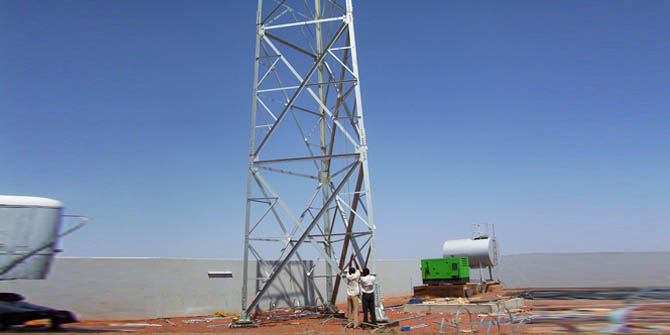
The assessment of structural integrity in critical infrastructure, particularly high-voltage transmission line lattice towers constructed primarily from angled steel sections, presents profound and persistent engineering challenges. These towers are subjected to relentless, complex loading regimes—including static weight, dynamic wind forces, thermal fluctuations, and seismic activity—all contributing to the initiation and propagation of localized defects, chiefly fatigue cracks and corrosion-induced material loss, often concentrated at critical welded or bolted joints. Traditional non-destructive testing (NDT) methods, such as manual ultrasonic testing or magnetic particle inspection, are often prohibitively slow, costly, and inherently localized, requiring extensive scaffolding or rope access for inspections across the thousands of angle sections comprising a single tower. The emergence of Guided Wave Ultrasonic Testing (GWUT) offers a paradigm shift in this field, promising long-range, high-speed screening capabilities. However, translating the theoretical advantages of GWUT into a reliable, field-deployable inspection methodology for the complex geometry of an angle steel section (L-profile) necessitates rigorous optimization, a core focus of which is the selection and refinement of the optimal excitation frequency through advanced numerical simulation techniques.
The Theoretical Foundation of Guided Wave Ultrasonics in Angle Steel
Guided waves, unlike bulk ultrasonic waves, travel along the boundaries of a structure, guided by its geometry. This ability to propagate over extended distances with minimal attenuation loss is what gives GWUT its long-range screening power. However, the complexity of GWUT begins with the fact that these waves are multi-modal and dispersive.
1. Multi-Modal Nature and Dispersion
For a simple structure like a pipe or plate, guided waves are typically classified into Torsional (T), Longitudinal (L), and Flexural (F) modes, each propagating at a different speed and possessing a unique displacement profile. When dealing with the complex, non-axisymmetric geometry of an angle steel section—an L-profile characterized by two intersecting plates (the legs) and a sharp corner—the classification of modes becomes significantly more intricate. The modes are no longer cleanly separable as T, L, or F; rather, they are complex Lamb-like modes that couple and interact across the two legs. The displacement fields become highly asymmetric, distributing energy across the flat surfaces and concentrating strain at the corner fillet.
Crucially, these modes are dispersive, meaning their propagation velocity ($v_{\text{p}}$ or $v_{\text{g}}$) is a function of the excitation frequency ($f$). This dispersion is the central technical challenge in GWUT, particularly for long-range inspection. If a wave packet contains a range of frequencies, different components travel at different speeds, causing the signal to stretch out in time (temporal spread) and reducing the energy peak of the returning echo, which severely compromises defect detection sensitivity and range. The optimization challenge, therefore, is to identify a frequency or narrow frequency band where dispersion is minimal—a region often referred to as a non-dispersive window or a region where the group velocity ($v_{\text{g}}$) curve is relatively flat.
2. The Critical Role of Excitation Frequency
The choice of excitation frequency is the most critical parameter in designing a GWUT system for angle steel, as it directly influences three competing factors:
-
Mode Selectivity and Existence: Specific guided wave modes only exist or are efficiently excited within certain frequency-thickness product ($f \cdot d$) ranges. The frequency chosen must excite a mode that is sensitive to the expected defect type (e.g., a mode with high shear stress components near the corner for fatigue cracks).
-
Dispersion Management: The frequency must be chosen to operate within a quasi-non-dispersive regime to maximize propagation distance and minimize signal complexity.
-
Attenuation and Sensitivity: Higher frequencies generally offer better defect resolution (shorter wavelength $\lambda$) but suffer from greater attenuation due to material scattering and energy leakage, limiting range. Conversely, lower frequencies travel further but may lack the spatial resolution ($\lambda/2$ rule of thumb) required to detect small fatigue cracks.
The complex interplay between these factors necessitates a systematic approach using numerical simulation—specifically the Finite Element Method (FEM) and the Semi-Analytical Finite Element (SAFE) method—to model wave propagation in the angle steel geometry before expensive physical experiments are attempted.
Numerical Simulation Methodology: Unlocking Mode Characteristics
Given the high cost and complexity of physically testing an infinite number of frequency combinations on angle steel, numerical simulation provides the essential pre-screening and optimization framework.
1. The SAFE Method for Dispersion Curves
The first step is to definitively understand the dispersion characteristics of the angle steel profile. The Semi-Analytical Finite Element (SAFE) method is the industry standard for this task. Unlike full 3D FEM, SAFE models the complex 2D cross-section of the L-profile using standard finite elements, while assuming infinite propagation in the third (longitudinal) direction. By solving the wave equations in the frequency domain, the SAFE method efficiently generates the comprehensive Dispersion Curves—the graphs showing phase velocity ($v_{\text{p}}$) and group velocity ($v_{\text{g}}$) versus frequency ($f$) for all possible guided wave modes.
The output of the SAFE analysis for an angle steel section (e.g., $L100 \times 100 \times 10$ steel angle with $10 \text{ mm}$ thickness) is crucial:
-
Identification of Non-Dispersive Modes: The engineer searches the $v_{\text{g}}$ curve for regions where the slope is close to zero, indicating stable group velocity and maximum signal coherence. These frequencies become the initial candidates for optimization.
-
Mode Selection for Sensitivity: The SAFE method also provides the mode shapes (displacement and stress profiles) for each mode at the candidate frequencies. For example, if the primary defect concern is a corner fatigue crack, the engineer must select a mode whose shear stress component ($T_{\text{xz}}$ or $T_{\text{yz}}$) is highly concentrated at the inner radius or corner fillet. Modes primarily concentrated in the centers of the flat legs will be insensitive to corner defects.
2. Full 3D FEM for Frequency Validation and Defect Interaction
Once the SAFE method has narrowed the field to a few optimal frequencies (e.g., $50 \text{ kHz}$, $75 \text{ kHz}$, $100 \text{ kHz}$), a full 3D Finite Element Method (FEM) simulation is required to validate the excitation efficiency, propagation range, and most importantly, the interaction with realistic defects.
-
Model Construction: A transient dynamics model is created in software (e.g., $\text{ABAQUS}$ or $\text{PZFlex}$) using absorbing boundaries (e.g., perfectly matched layers, $\text{PML}$) to simulate an infinitely long structure, preventing unwanted reflections from the model ends. A realistic defect (e.g., a $5 \text{ mm}$ deep notch simulating a fatigue crack in the corner fillet) is introduced.
-
Excitation Signal: The input is typically a windowed tone burst (e.g., $5$-cycle Hanning windowed sinusoid) at the candidate frequency.
-
Analysis and Optimization: The FEM simulation provides a time-domain analysis, generating the A-scan signal received by virtual sensors along the structure. The engineer compares the Signal-to-Noise Ratio (SNR) of the defect echo across the candidate frequencies. The optimal frequency is the one that produces the highest $\text{SNR}$ for a defect of the minimum detectable size, while maintaining an acceptable baseline signal level after a long propagation distance (e.g., $10 \text{ meters}$). This simulation directly confirms the sensitivity prediction derived from the SAFE mode shapes and accounts for geometric scattering losses that the SAFE method does not fully capture.
This two-step numerical process transforms the initial, highly complex problem into a manageable experimental design space, moving from an infinite set of possibilities to a few rigorously tested frequency options.
Experimental Verification and Optimization: The Final Test
The results from the numerical simulation must be validated through practical experimentation on real-world angle steel specimens, recognizing that the ideal conditions of the computer model do not fully account for surface roughness, residual stresses, or actual material variability.
1. Transducer Selection and Coupling
The practical application of GWUT relies on efficient conversion of electrical energy into mechanical wave energy. For angle steel, specialized electromagnetic acoustic transducers ($\text{EMATs}$) or high-power piezoelectric transducers ($\text{PZTs}$) are required.
-
PZT Challenges: $\text{PZTs}$ require acoustic coupling (gel or grease) and must be carefully shaped or arrayed to conform to the corner or flat surfaces of the L-profile. This complexity introduces coupling variations, a major source of field noise and signal inconsistency.
-
EMAT Advantages: $\text{EMATs}$ can excite guided waves without direct contact or coupling medium, making them ideal for rough, painted, or corroded tower steel. They work by inducing Lorentz forces in the steel, which is an especially clean way to excite specific modes. The design of the $\text{EMAT}$ coil (e.g., meander coil, spiral coil) is intrinsically linked to the optimal frequency, as the coil pitch dictates the excited wavelength ($\lambda$). The frequency must match the required wavelength ($\lambda = v_{\text{phase}}/f$) for efficient mode generation.
2. Frequency Sweep Testing and Data Interpretation
A comprehensive Frequency Sweep Test is performed on a full-scale angle steel specimen containing pre-machined, representative defects of varying size and location (e.g., corner cracks, leg surface defects).
-
Procedure: The system is excited with the optimized tone bursts identified from the $\text{FEM}$ results (e.g., $50 \text{ kHz}, 75 \text{ kHz}, 100 \text{ kHz}$) and the received signals are compared.
-
Time-Frequency Analysis: Due to residual dispersion and the multi-modal nature, simple time-domain $\text{A}$-scans can be ambiguous. Advanced signal processing, such as the Short-Time Fourier Transform ($\text{STFT}$) or Wavelet Analysis, is applied to the received signal. This separates the complex arrival signal into distinct mode packets based on their frequency content and group velocity. The goal is to isolate the defect echo mode and confirm its velocity and time of flight, providing clear differentiation from geometric reflections (e.g., from bolt holes or stiffeners) and noise.
-
Final Optimization: The frequency that maximizes the $\text{SNR}$ of the defect echo and provides the clearest mode separation in the time-frequency domain is deemed the Optimal Operating Frequency for that specific angle steel profile. This empirical result often validates the FEM prediction but provides the critical field performance data necessary for implementation.
The experimental validation confirms that the most technically optimal frequency is not simply the one that excites the most energy, but the one that ensures a robust, easily interpretable signal over the required long range in a real-world environment.
Engineering Impact and System Implementation
The successful optimization of the GWUT frequency for angle steel transforms the maintenance of transmission towers from a localized, high-risk activity into an industrialized, high-speed screening process.
1. Mode Focusing and Range Extension
Once the optimal frequency and mode are selected, advanced techniques can be applied to further enhance performance. By using phased array transducer systems (either $\text{PZT}$ or $\text{EMAT}$ arrays), the wave energy can be mode-purified and directionally focused. This means exciting only the desired mode at the optimal frequency while steering the wave energy towards critical areas (like the corner joints), maximizing the energy concentration at the inspection zone and increasing the effective detection range beyond what a simple single-element transducer could achieve. The range extension is a direct consequence of operating in a non-dispersive frequency window with minimized mode scattering.
2. Data Management and Decision Making
The data acquired by the optimized GWUT system—a vast collection of $\text{A}$-scans and $\text{STFT}$ plots—must be integrated into a robust data management framework. The primary goal of GWUT is screening: quickly identifying tower members that exhibit anomalies (defect echoes). These “positive” members are then flagged for secondary, localized inspection using traditional $\text{NDT}$ methods (e.g., phased array $\text{UT}$) to precisely size and locate the defect. This approach optimizes resource allocation, moving away from expensive full-coverage inspection to a targeted confirmation approach, significantly reducing maintenance costs and downtime.
3. Challenges of Real-World Deployment
Despite the optimization, practical deployment on live transmission towers faces challenges:
-
Tower Profile Variability: Transmission towers utilize a wide range of angle steel sizes (e.g., $L50 \times 50 \times 5$ to $L200 \times 200 \times 20$). Since the optimal frequency is directly related to the geometry (the $f \cdot d$ product), the inspection system must be either capable of rapid frequency adjustment or equipped with a library of optimized settings for common profiles.
-
Bolted and Welded Joints: Wave energy is inevitably scattered or reflected at bolted joints and welded connections. These joints act as geometric discontinuities, often creating strong ‘junk’ echoes that can mask defect signals. Advanced algorithms are necessary to perform feature recognition—distinguishing between the known reflections from structural features and the genuine, anomalous reflections from defects.
The successful implementation of this technology hinges on the precision gained during the frequency optimization phase, which determines the sensitivity and clarity of the raw signal, the cornerstone upon which all subsequent signal processing and decision-making relies. The scientific endeavor is thus the seamless integration of theoretical wave mechanics, numerical simulation, and rigorous experimental validation, resulting in a system capable of reliably safeguarding critical energy infrastructure.
Summary of Optimization Parameters
The following table summarizes the key parameters and the tools used in the iterative process of optimizing the guided wave frequency for angle steel inspection:
| Parameter Category | Optimization Goal | Technical Parameter | Optimization Tool | Critical Output |
| I. Wave Mechanics | Long-Range Propagation | Non-Dispersive Frequency | SAFE Method | Group Velocity ($v_{\text{g}}$) vs. Frequency Curve |
| Defect Interaction | Stress Concentration at Defect Location | SAFE Mode Shape Analysis | Shear Stress Profile ($T_{\text{xz}}$) | |
| II. Simulation | Sensitivity & SNR | Defect Echo Amplitude vs. Frequency | 3D Transient FEM | A-Scan Signal-to-Noise Ratio (SNR) |
| Range Verification | Attenuation Rate over Distance | 3D Transient FEM (PML Boundaries) | Baseline Signal Decay | |
| III. Experiment | Field Robustness | Mode Selectivity and Clarity | Frequency Sweep Test | Time-Frequency Analysis (STFT) Plot |
| Transducer Matching | $\text{EMAT}$ Coil Pitch or $\text{PZT}$ Geometry | Experimental Tuning | Excitation Efficiency and Mode Purity |