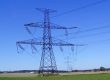

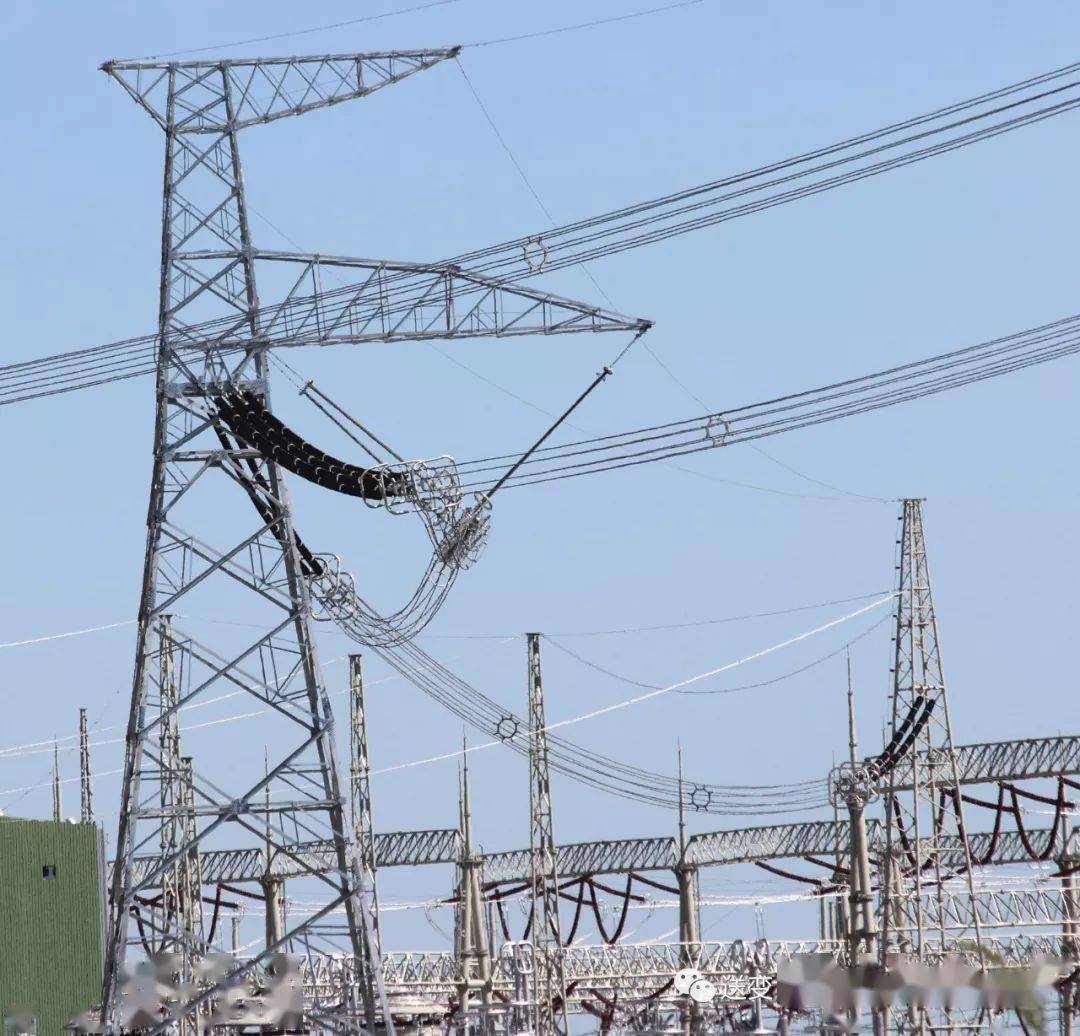
When we contemplate the structural essence of a Double Circuit Angle Steel Power Transmission Tower, we are essentially dissecting a complex mechanical organism designed to navigate the harrowing contradictions of modern power delivery—the requirement to carry twice the electrical capacity within a footprint that remains constrained by increasingly scarce right-of-way corridors. This is not merely a stack of galvanized steel angles bolted together; it is a meticulously tuned harmonic system that must simultaneously manage the massive vertical dead loads of six heavy conductors (and their corresponding shield wires) while resisting the unrelenting lateral shear of wind and the insidious longitudinal torque of unbalanced tension. The “double circuit” configuration introduces a verticality and a density of loading that single-circuit towers never face; you are dealing with a higher center of gravity and a significantly larger “sail area” provided by the dual sets of insulator strings and cables. This necessitates an internal monologue on the part of the engineer that moves beyond simple truss logic into the realm of high-order geometric stability. We must consider how the angle steel, specifically the hot-rolled unequal or equal-leg sections, behaves under the eccentric loading typical of these multi-tier cross-arm arrangements. When wind strikes a double circuit tower, the shielding effect of the windward conductors on the leeward ones is never a guarantee; instead, the turbulence shedding from the first circuit can create a buffeting effect on the second, inducing a cyclic vibration that tests the fatigue life of every gusset plate and bolt.
To truly understand the technical depth of this product, one must first look at the metallurgical soul of the structure, which is defined by a rigorous adherence to chemical equilibrium. We are not just looking for strength; we are looking for a specific marriage of yield capacity and cryogenic toughness. In a double circuit tower, the leg members at the base—the “heavy lifters”—often require high-strength low-alloy steels like Q420 or even Q460. The carbon content must be kept low enough to ensure weldability and prevent the formation of brittle martensite during the cooling phases of manufacturing, yet high enough to provide the base hardness required for the high-stress environment of a 50-meter cantilever. Manganese is our primary ally here, acting as a grain refiner and enhancing the impact toughness, which is critical because these towers often stand in environments where the temperature swings can induce a transition from ductile to brittle behavior. If the steel becomes brittle at -20°C, a sudden gust of wind could propagate a micro-crack from a punched bolt hole with the speed of sound, leading to a catastrophic structural “unzipping.”
Table 1: Chemical Composition Requirements for High-Strength Tower Steel
| Element | Carbon (C) max % | Silicon (Si) max % | Manganese (Mn) % | Phosphorus (P) max % | Sulfur (S) max % |
| Main Leg (Grade Q420) | 0.20 | 0.50 | 1.00 – 1.70 | 0.030 | 0.025 |
| Cross-Arms (Grade Q355) | 0.22 | 0.55 | 1.00 – 1.60 | 0.035 | 0.030 |
| Connection Plates | 0.18 | 0.45 | 1.20 – 1.65 | 0.025 | 0.020 |
As our thoughts flow from the chemical to the thermal, we recognize that the heat treatment of these angle sections is what determines their reliability under the extreme “Load Cases” (LC) specified by international standards like ASCE 10-15 or IEC 60826. The rolling process itself introduces a grain orientation that we must manage. For the thickest leg members, normalizing is not an option—it is a necessity. By heating the steel to its austenitic range and allowing it to cool in still air, we dissolve the coarse, uneven grains and replace them with a fine, equiaxed pearlite-ferrite matrix. This ensures that the mechanical properties are isotropic, meaning the steel will resist a “broken wire” longitudinal snap just as effectively as it resists a transverse hurricane. This thermal discipline is also what prepares the steel for the “thermal shock” of hot-dip galvanizing. If the residual stresses from the straightening and punching processes are not neutralized, the 450°C zinc bath will cause the members to warp or, worse, undergo “strain-age embrittlement,” turning a high-performance structural component into a liability before it even leaves the factory.
Table 2: Mandatory Heat Treatment & Processing Protocols
| Process | Temperature / Duration | Structural Justification |
| Normalizing (Legs) | 890°C – 920°C | Refines grain for maximum impact toughness and ductility. |
| Stress Relieving | 600°C – 650°C | Applied to heavy plates to prevent cracking at hole edges. |
| Galvanizing Control | 445°C – 455°C | Ensures a metallurgical bond without sacrificing steel ductility. |
| Straightening | Ambient / Mechanical | Must be done before galvanizing to avoid cold-work hardening. |
The physical manifestation of this engineering is found in the tensile and compressive limits of the tower. In a double circuit tower, the “downward” force of the conductors is massive, particularly during an icing event where the radial ice thickness might reach 20mm or 30mm. This creates a state of “combined stress” where the leg members are simultaneously fighting axial compression and a global bending moment. The yield strength is our line in the sand; if the stress exceeds this, the tower undergoes permanent plastic deformation. However, for angle steel, the governing failure mode is almost always buckling rather than yielding. This is why we focus so heavily on the slenderness ratio ($L/r$). The design of the bracing system—the secondary and tertiary members that break up the unbraced length of the main legs—is a mathematical exercise in preventing Euler buckling. We must ensure that the “buckling capacity” of the compressed leeward leg is always higher than the maximum factored load, accounting for the “eccentricity” of the bolted connections which tends to introduce unwanted local moments into the members.
Table 3: Mechanical and Tensile Requirements (Primary Structural Sections)
| Property | Grade Q355 (Secondary) | Grade Q420 (Primary) | Grade Q460 (Heavy Duty) |
| Yield Strength ($R_{eH}$) | $\ge 355$ MPa | $\ge 420$ MPa | $\ge 460$ MPa |
| Tensile Strength ($R_m$) | 470 – 630 MPa | 520 – 680 MPa | 550 – 720 MPa |
| Elongation ($A_5$) % | $\ge 21\%$ | $\ge 19\%$ | $\ge 17\%$ |
| Charpy V-Notch (-20°C) | 27 Joules | 34 Joules | 40 Joules |
When we move into the actual operational analysis of the Double Circuit Angle Steel Tower, we enter the world of “Dynamic Sensitivity.” Because these towers are taller than their single-circuit counterparts to maintain safety clearances for two levels of conductors, they are more susceptible to vortex-induced vibrations and the “P-Delta” effect. The P-Delta effect is a second-order non-linearity where the lateral deflection of the tower, caused by the wind, creates an additional moment from the vertical gravity loads of the conductors hanging off those long cross-arms. In a sophisticated technical analysis, we use Finite Element Analysis (FEA) to perform a “Non-linear P-Delta Analysis,” ensuring that the tower doesn’t reach a point of “geometric instability” where the leaning of the tower creates more moment than the stiffness of the steel can counteract. We also look at the “Broken Wire” condition, which for a double circuit tower is a nightmare scenario; if one set of conductors on the top cross-arm snaps, the tower is subjected to a massive torsional “twist” that can buckle the diagonal bracing if the “torsional rigidity” of the lattice cage isn’t sufficient.
The final layer of this analysis is the “Soil-Structure Interaction” (SSI). A self-supporting double-circuit tower puts immense “uplift” and “down-thrust” forces on its foundations. Under a peak gust, the windward foundation is literally trying to be pulled out of the earth. We design the “chimney” and “pad” of the reinforced concrete foundation to act as a counterweight, but the real engineering lies in the transfer of force from the steel leg to the concrete via the “stub” or anchor bolts. The “shear lag” in these connections must be minimized. By using high-strength bolts and ensuring that the gusset plates are thick enough to prevent “block shear” failure, we ensure that the tower remains an immovable object in the face of an irresistible force. This holistic approach—from the sub-atomic grain structure of the steel to the macro-geology of the foundation—is what makes our Double Circuit Angle Steel Power Transmission Towers the gold standard for grid reliability. It is a product born of rigorous science, shaped by the harsh reality of the atmosphere, and built to ensure that energy flows uninterrupted, regardless of the storms that rage against it.